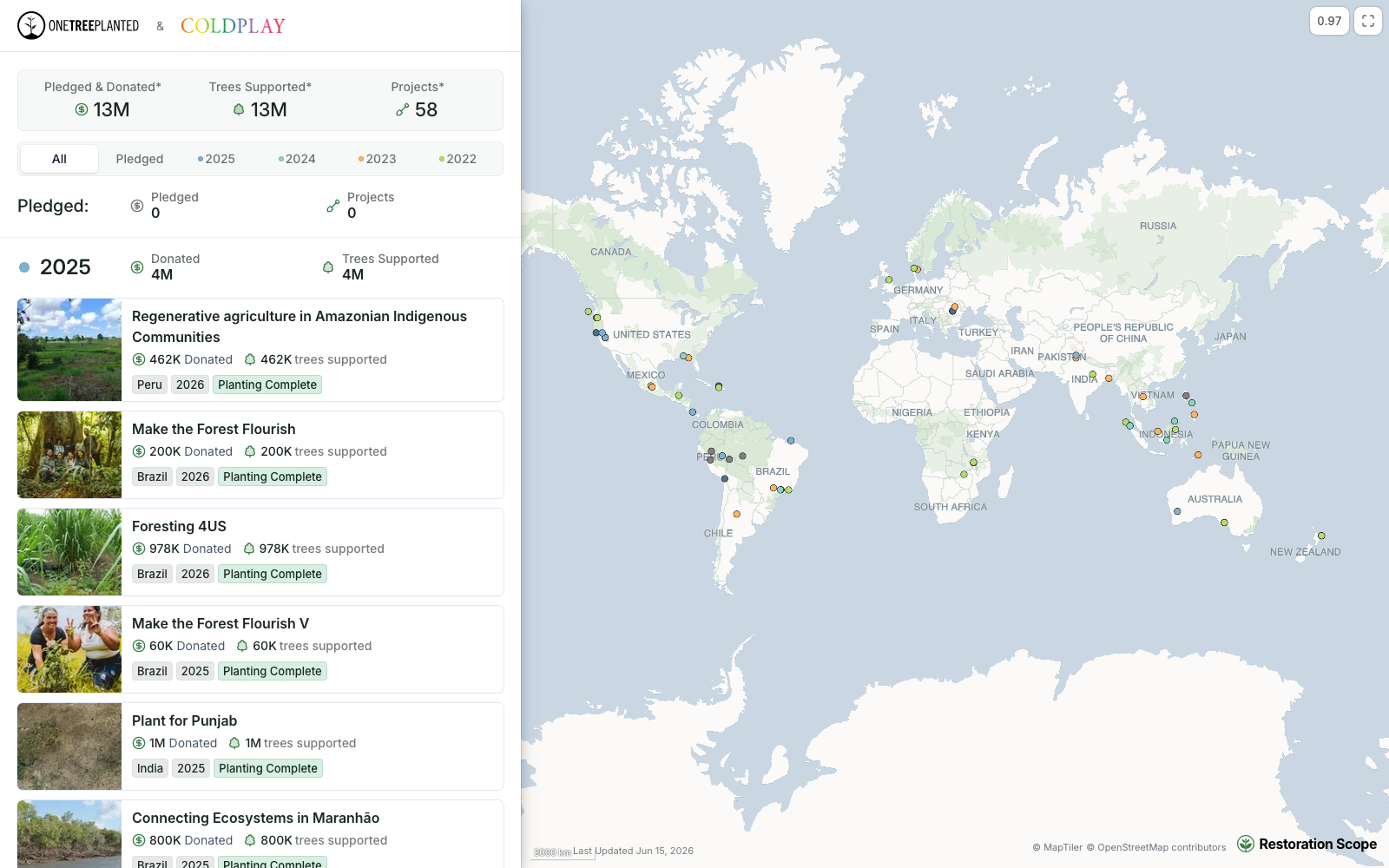
A portal fed by the work
Each funder's portal shows the projects they support, from the records field teams keep.
explorer.land lets nature projects publish a map-based page that tells their story to funders, with a free plan to start. Restoration Scope builds donor portals from the records field teams keep, so what donors see is the work itself.
 Restoration Scope
It depends on where the donor story comes from. For a public project page you set up yourself, for one or a few projects told as a story, explorer.land is the quicker start, with a free plan. If donors should see what field teams recorded, with no separate reporting step, or you run many sites or a multi-partner programme, Restoration Scope builds donor portals from the records the team keeps.
| Restoration Scope | ||
|---|---|---|
| Main job | A public, story-led project page to show work and attract funding. | An operational system. Donor portals are one view of the same data. |
| Cost | As of October 2026: free for 1 project, 1 site and 2 editors. Starter is €49 and Professional €99 per project a month (€34 and €69 billed yearly). Enterprise by quote. | Priced per project after a scoping call. No public price list. |
| Setup | Self-serve sign-up. Draw or upload boundaries on satellite base maps. | Configured with our team. |
| What donors see | A project map, geolocated news posts, SDG tags and partners. | Sites, progress and records from field teams, per donor or programme. |
| Where the data comes from | What editors post, draw or upload: news posts, boundaries and geodata imports, with API and partner data on Enterprise. | What field teams capture, plus connected Kobo, Google Sheets and GIS files. |
| Field monitoring | A mobile app in every plan. Monitoring centres on satellite indicators and an impact dashboard that can take in field data; Enterprise adds integrations such as sensors. | The offline Field App, with visits and survival records linked to each site. |
| Satellite and layers | High-resolution imagery from Starter. Custom layers and geoanalytics on Enterprise. | Geospatial data layers per project. |
| Funding routes | Lists investments, sponsorships, donations, and carbon and biodiversity credits. | None. We do not match funders or sell credits. |
Checked against explorer.land's own pages on October 17, 2026: explorer.land, Plans overview, Platform, What we offer, Base maps.
These are Restoration Scope screens from our demo project and a public donor portal. To see explorer.land, visit its own site.
Each funder's portal shows the projects they support, from the records field teams keep.

Visits, plots and survival records sit on the site they belong to.
explorer.land sits beside the ladder: it publishes a project’s map, monitoring and story for funders. Restoration Scope is an adaptable platform, and its donor portals show the records the team keeps.
Where restoration records live, from word of mouth to custom softwareFor donor reporting that should come from operational records, yes. For a public story page you set up yourself, explorer.land is the quicker start, with a free plan.
As of October 2026, it is free for one project with one site. Paid plans are priced per project per month, from €34 billed yearly.
In Restoration Scope portals, yes: donors read the same records the team keeps. The One Tree Planted portal for Coldplay is a public example.
explorer.land lists funding routes, including credits. Restoration Scope does neither.
Restoration Scope publishes this comparison. Something out of date? Write to info@restorationscope.com.
Bring in the spreadsheets, field forms and maps you already use, and see every site in one place.